Top 10 IT Support Outsourcing Companies in the World (2027)
Explore the top 10 IT support outsourcing companies in the world for 2027 to access 24/7 technical coverage, reliable SLAs, and lower help desk costs without the in-house overhead.
Table of contents
Key Takeaways
- Offloads night shifts, shift cover, and rising backlogs to external teams so internal engineers can focus on core projects.
- Resolving the bulk of routine issues at L1 (or Tier 0 bots) keeps costs down before escalating to pricey L2/L3 engineers.
- Options range from predictable per-seat fees ($15–$40/user/mo) to per-ticket billing ($10–$30/ticket) for spiky volumes.
- Modern desk providers use AI bots to deflect L1 volume and measure success using user productivity (XLAs) over raw ticket counts.
- Most firms outsource high-volume L1 help desk tasks while keeping L2/L3 core product knowledge in-house.
- The cheapest desk costs more if it escalates every ticket; prioritize high first-touch fixes, strict SLAs, and security standards (ISO 27001).
When a laptop dies before a big pitch or a login breaks at midnight, someone has to pick up. For many companies, running that support in-house is a drain: you juggle staffing, shift cover, tooling, and rising ticket volumes. So a growing number turn to IT support outsourcing companies. They give you a trained service desk, round-the-clock coverage, and clear SLAs, without you building the whole operation yourself.
The market reflects the shift, and IT support outsourcing companies are busier than ever. Technical support outsourcing is worth roughly $51 billion in 2025 and climbing near 6% a year, as firms push routine tickets to partners and free their own teams for higher-value work. So the choice isn't really whether to outsource support. It's who to trust with your users.
This guide ranks the top 10 IT support outsourcing companies in the world for 2026, with a note on who each one suits. After the list, we cover support tiers, pricing, the metrics that matter, red flags, and how to choose. One read should leave you ready to shortlist.
What Is IT Support Outsourcing
IT support outsourcing means handing your help desk or service desk to one of the many IT support outsourcing companies. That partner takes on the work for you. That partner answers tickets, fixes issues, and keeps your users working. You set the standards; they run the operation.
It covers more than a phone line, though. Modern support spans end-user computing, application help, infrastructure monitoring, and self-service tools. So a good provider handles the whole flow, from first contact to root-cause fix.
The appeal is coverage and focus. You get 24/7 support and SLA-backed reliability, while your own team stays on core work. So it suits firms that want dependable support without the overhead of building it.
The Levels of IT Support
Support is usually split into tiers, by complexity, and IT support outsourcing companies staff each one. Knowing them helps you scope what you need, and what you should pay for. Here's the standard breakdown.
Tier | Scope | Examples |
| L1 | First contact, routine issues | Password resets, how-to questions |
| L2 | Deeper technical problems | Configuration, software faults |
| L3 | Expert and engineering work | Root-cause fixes, code, infrastructure |
There's often a tier zero, too, made of self-service tools and chatbots that fix simple issues before a human sees them. Above that, L1 handles the bulk of tickets, usually the quick, repeatable ones. L2 takes the harder technical problems, and L3 brings in engineers for root-cause and code-level fixes.
The tier mix drives your bill. L1 agents cost far less than L3 engineers, so a provider that resolves more at L1 keeps costs down. AI is shifting that balance, however, since bots now absorb many routine L1 tickets. So ask a provider how work flows between tiers, and how much it deflects before a person steps in.
What IT Support Can Be Outsourced
Not every provider covers the same ground. IT support outsourcing companies span several distinct services, from a simple phone line to full IT operations. Here are the common ones.
- Help desk. L1 ticket intake, triage, and routine fixes like password resets and how-to questions.
- Service desk. A broader function tied to ITSM process, incident and problem management, and structured escalation.
- End-user computing. Device setup, software installs, access management, and everyday user support.
- Infrastructure monitoring. Round-the-clock watch over servers, networks, and uptime, usually via a NOC.
- Application support. L2 and L3 help for business-critical software, from bug triage to permanent fixes.
- Self-service and automation. Chatbots, knowledge bases, and AI-assisted resolution that deflect common issues.
Most partners bundle several of these, though you don't have to hand over everything. Many firms outsource the L1 help desk and keep application support in-house, or the reverse. So decide what drains your team most, then start there.
IT Support Outsourcing Models
Beyond the service, IT support outsourcing companies also let you pick how support is priced and run. Each model suits a different pattern of demand. The table lays them out.
Model | How It's Priced | Best For |
| Per-seat | Per supported user, monthly | Predictable end-user support |
| Per-ticket | Per resolved ticket | Variable or spiky volume |
| Dedicated team | Fixed monthly fee | Ongoing, deep support |
| Managed service desk | Bundled, SLA-based | Full-service desk offload |
Per-seat pricing charges a flat rate for each supported user. That makes budgets predictable, which finance teams like. It can cost more, though, if your users rarely raise tickets.
Per-ticket pricing bills only for issues resolved. It flexes with demand, so it suits spiky or seasonal volume. Costs are harder to forecast, however, when ticket counts swing.
Dedicated teams give you a fixed group at a monthly fee. They learn your systems deeply and feel like your own staff, which suits ongoing, complex support.
Managed service desks bundle the whole function against agreed SLAs. The provider owns the operation end to end, so it offloads the most.
There's no single right model, though. Many firms blend them, using per-seat for steady users and per-ticket for overflow. So match the model to how your ticket volume actually behaves.
Benefits of Outsourcing IT Support
IT support outsourcing companies deliver value in several clear ways. Each one ties back to coverage, cost, or quality.
- 24/7 coverage. Users get help at any hour, across time zones, without you running night shifts.
- Lower cost. You skip recruiting, training, tooling, and shift-cover overhead.
- SLA reliability. Clear targets hold response and resolution times to account.
- Scalability. Support flexes up for spikes, like a product launch, and back down when they pass.
- Access to tooling. You inherit mature ITSM platforms and AI tools without buying them.
- Focus. Your internal team stays on projects, not password resets.
The payoff is measurable, too. Many firms cut cost per ticket, lift first-contact resolution, and improve satisfaction once a specialist takes the load. Business continuity gets stronger as well, since a distributed provider keeps support running through outages or staffing gaps. So the benefit isn't just cheaper support. It's more reliable support, backed by numbers.
Metrics and SLAs That Matter
Support quality lives in the numbers. A good contract ties the provider to clear targets. Watch these closely.
Metric | What It Measures | Why It Matters |
| First-contact resolution | Issues fixed on the first touch | Efficiency and user experience |
| Mean time to resolve | Average time to close a ticket | Speed of support |
| SLA compliance | Share of tickets within targets | Reliability |
| CSAT | User satisfaction score | Overall support quality |
Newer contracts add experience-level agreements, too. These tie the provider to user productivity, not just ticket counts. So ask how a partner measures outcomes, not just activity.
When Should You Outsource IT Support
Certain signs make outsourcing an easy call, and IT support outsourcing companies exist for exactly these. If any describe you, it's worth exploring. Struggling on alone tends to cost more later.
- Ticket volume is outpacing your team. Backlogs and slow fixes are creeping in.
- You need 24/7 or multi-region cover. Your users span time zones.
- Support is pulling engineers off projects. Core work keeps stalling.
- Costs are climbing. Recruiting and tooling are eating the budget.
- Standards are slipping. Response times and satisfaction are drifting.
If two or more ring true, outsourcing likely fits. So weigh it against the cost of poor support.
In-House Support vs Outsourcing
Should you run support yourself or hand it off? Both work, and the right call depends on scale. Each has clear trade-offs.
An in-house desk gives you full control and deep product knowledge. It suits smaller, steady support loads where staff know the systems well. The catch is cost, though: recruiting, tooling, and 24/7 shift cover add up fast.
Outsourcing suits growing volume, wider hours, and tighter budgets. IT support outsourcing companies bring trained agents, ITSM tooling, and SLAs from day one. You give up a little direct control, however. So many firms keep L2 and L3 in-house and outsource the L1 front line. For the broader picture beyond support, see our roundups of the top IT services outsourcing companies in the USA and UK.
Industries That Outsource IT Support
Some sectors lean on support outsourcing more than others. Each has its own driver. The table shows the busiest.
Industry | Why They Outsource | Common Support |
| SaaS & tech | High ticket volume, 24/7 users | Technical L1–L3 |
| Finance | Compliance and uptime | Secure service desk |
| Retail & e-commerce | Seasonal spikes | Scalable help desk |
| Healthcare | Round-the-clock systems | End-user support |
| Manufacturing | Multi-site operations | Infrastructure support |
Across all of them, one pattern holds. When users are many or hours are long, IT support outsourcing companies carry the load.
How We Selected These Companies
This ranking isn't guesswork. Each of these IT support outsourcing companies had to clear a bar, which keeps the list useful rather than promotional. It reflects our judgment, however, so treat it as a starting point.
Here's what we weighed:
- Real support delivery. Every firm runs genuine service desk or help desk operations.
- SLA discipline. Strong metrics, escalation, and reporting mattered most.
- Scale and coverage. Multi-site, multilingual, round-the-clock reach counted.
- Tooling and AI. ITSM depth and modern automation added weight.
- Track record. Client history and years in the field all factored in.
No firm leads on every measure, though. So each entry ends with a "Best for" note to steer you.
At a Glance: The Top IT Support Outsourcing Companies Compared
Short on time? This side-by-side view captures all ten at once. It lines up each firm against its base, its core strength, and the job it suits best, so you can weigh them without scrolling. Shortlist two or three that fit, then read their full profiles below for the detail.
# | Company | Base | Core Strength | Best For |
| 1 | Softaims | Global / offshore talent | Vetted talent, 48-hour matching | Building a flexible support team |
| 2 | Devaims | Softaims-owned | Support-ready software talent | Product plus support engineering |
| 3 | Cognizant | Teaneck, US | Managed support plus integration | App and infrastructure support |
| 4 | Accenture | Global | ITSM-governed service desk | Transformation-linked support |
| 5 | Wipro | Bengaluru, India | SLA-governed operations | Multi-site, metric-driven support |
| 6 | Infosys | Bengaluru, India | Governed transitions | Measurable, large-scale support |
| 7 | Capgemini | Paris, France | Service desk plus engineering | Enterprise support workflows |
| 8 | Concentrix | Newark, US | Analytics-first technical support | High-volume, data-rich support |
| 9 | HCLTech | Noida, India | Digital workplace and service desk | End-user computing at scale |
| 10 | Computacenter | Hatfield, UK | Support tied to infrastructure | Workplace and infra resolution |
The Top 10 IT Support Outsourcing Companies in the World
With the groundwork done, here are the picks. The ten IT support outsourcing companies below span global BPOs, enterprise IT services firms, and flexible talent platforms. Each earned its place for genuine delivery, strong SLAs, and real coverage, however. The "Best for" line under each entry points you to the closest fit.
1. Softaims
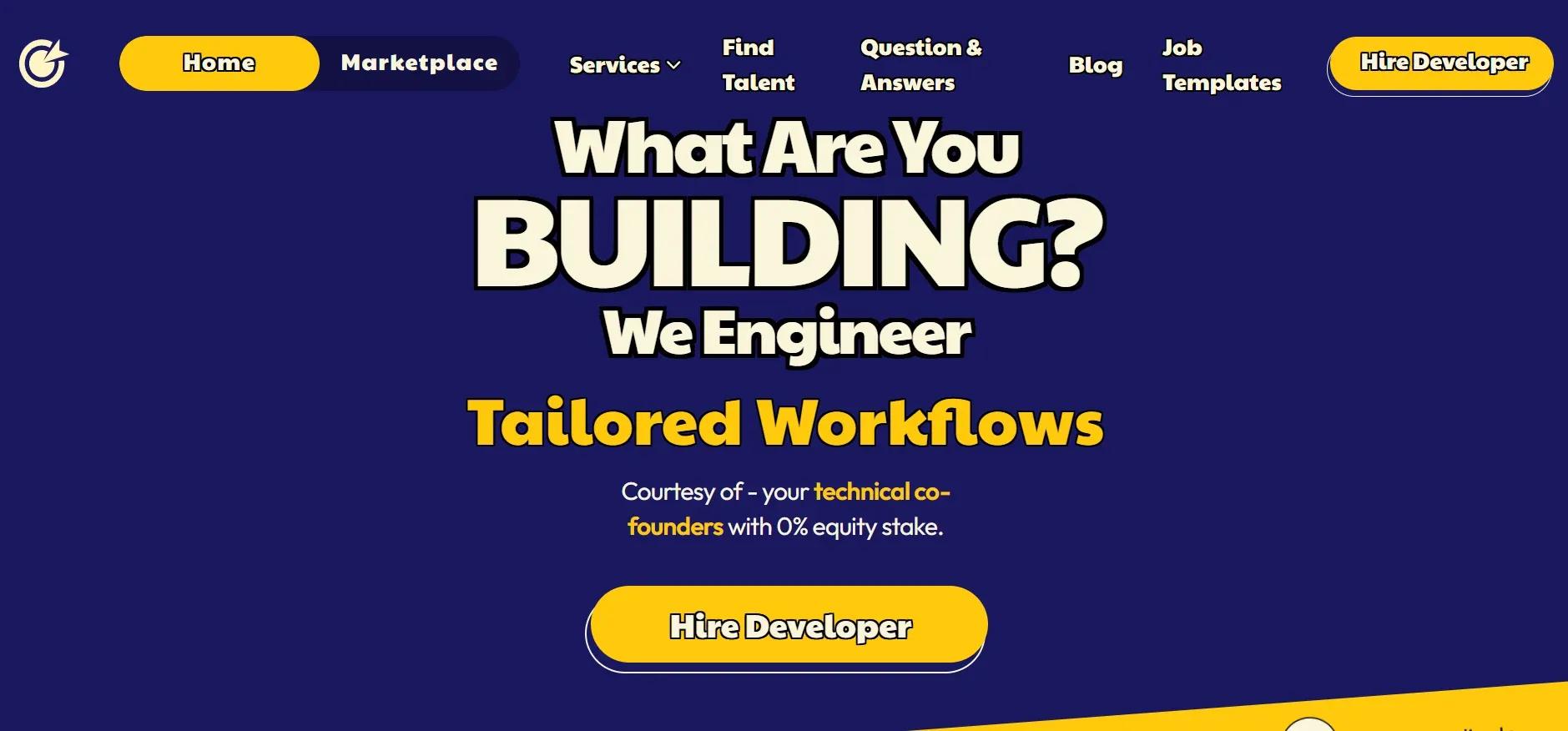
Softaims leads our list with a different model, and a practical one. Rather than a giant, one-size service desk contract, it connects you with the top 3% of vetted engineers within 48 hours. So you can build or extend your own IT support team fast, and at a fraction of a permanent hire's cost.
This flexibility suits support work well. You can bring on DevOps and SRE engineers to keep systems healthy, or cloud specialists to support your infrastructure. You can also add QA automation testers to catch issues before users ever file a ticket. Every engineer is vetted for real skill, not just a polished CV.
The model bends to your needs. You can add a single specialist or a full pod, and they work your hours and process. So they operate like your own staff, without a multi-year commitment. You can browse available talent or check transparent rates before you commit. The same vetted model works for wider hiring, too, such as our guides to the top platforms to hire web app developers in the USA and UK.
Key highlights:
- Top 3% vetted engineers, matched within 48 hours
- DevOps, SRE, cloud, and QA talent for support
- Flexible staff augmentation and dedicated teams
- Your hours, your process, no heavy minimums
Best for: Teams that want to build a flexible support or reliability team, without a giant service-desk contract.
2. Devaims
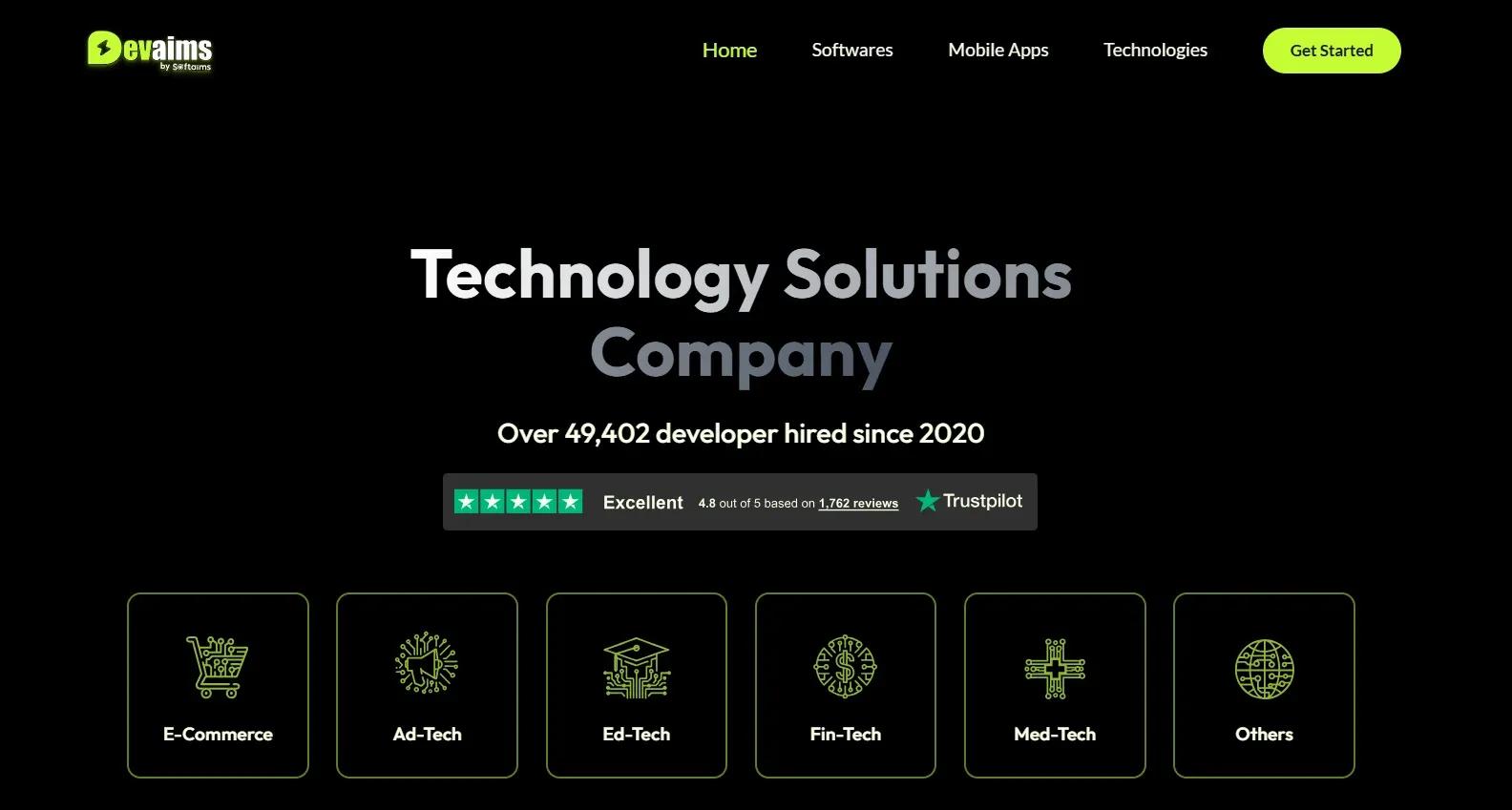
Devaims is a development studio that builds and maintains custom software. Its engineers don't just ship features; they also handle fixes, updates, and application support after launch. So it fits firms that want the people who built the product to keep it running.
The August 2026 acquisition by Softaims linked the two. Devaims clients now reach the same vetted network and 48-hour matching. One partner can cover software development and mobile app development, plus the ongoing support that keeps them stable.
Key highlights:
- Custom software plus ongoing support
- Application maintenance and updates
- Backed by Softaims' vetted talent since 2026
- Web, mobile, and back-end under one roof
Best for: Teams that want product engineers who also handle application support.
3. Cognizant

Cognizant is a global IT services firm strong in managed support. It runs service desks that tie ticket handling to application and infrastructure work. So issues route to the right team, with performance reporting throughout.
The firm pairs help desk delivery with deep integration across systems. Its ticket lifecycle management links resolution to clear escalation outcomes. Cognizant suits mid-market to enterprise teams that want SLA-driven support with solid reporting. So it fits firms needing support woven into their wider IT estate.
Key highlights:
- Managed service desk plus integration
- Ticket lifecycle and escalation management
- Strong performance reporting
- Application and infrastructure coverage
Best for: Global enterprises needing managed support plus integration across apps and infrastructure.
4. Accenture
Accenture is the world's largest professional services firm, and a serious force in support. It runs outsourced service desks tied tightly to ITSM governance and engineering workflows. So support fits into a broader transformation program.
The firm brings deep process discipline and global scale. Its service desks link routine tickets to structured resolution paths. Accenture suits large enterprises that want support as part of wider change, not a standalone contract. So it fits firms modernizing IT while keeping users supported.
Key highlights:
- ITSM-governed service desk operations
- Ties support to engineering workflows
- Massive global scale
- Fits transformation programs
Best for: Enterprises needing outsourced service desk operations linked to ITSM governance.
5. Wipro
Wipro is a major Indian IT firm with strong support operations. It runs SLA-governed IT support with formal escalation, clear metrics, and multi-site coverage. So users get consistent service across regions.
The firm leans on structured process and reporting. Its escalation paths and dashboards keep performance visible. Wipro suits enterprises that want disciplined, measurable support at scale. So it fits firms with users spread across many sites and time zones.
Key highlights:
- SLA-governed support operations
- Formal escalation and metrics
- Multi-site, multi-region coverage
- Structured reporting
Best for: Enterprises needing SLA-governed support with formal escalation across sites.
6. Infosys
Infosys is another Indian IT leader, and a common pick for governed support. Its enterprise delivery governance supports multi-process transitions and performance reporting across global workstreams. So it handles complex, large-scale support moves smoothly.
The firm pairs measurable support with broader transition capability. It's known for structured onboarding of new support scopes. Infosys suits enterprises that want governed, metric-driven support plus room to grow the engagement. So it fits firms planning phased support transitions.
Key highlights:
- Governed, measurable support
- Multi-process transition capability
- Global performance reporting
- Structured delivery governance
Best for: Enterprises needing governed, measurable support plus broader transition capability.
7. Capgemini

Capgemini is a French multinational with a strong support practice. It runs outsourced service desks tied to ITSM governance and engineering workflows. So support connects cleanly to the systems behind it.
The firm is a leader in Europe, with deep managed services experience. Its service desks route work through governed escalation paths. Capgemini suits enterprises that want support woven into ITSM and engineering. So it fits firms wanting a Europe-anchored, process-led partner.
Key highlights:
- Service desk plus ITSM governance
- Links support to engineering workflows
- Strong European presence
- Deep managed services experience
Best for: Enterprises needing outsourced service desk operations tied to ITSM and engineering.
8. Concentrix
Concentrix is a US-based BPO and technical support giant headquartered in Newark, California. It runs outsourced IT help desks and complex technical support across hardware, software, and cloud. So it handles high-volume support with real technical depth.
The firm invests heavily in analytics and AI. Its tools give clients detailed visibility into resolution rates and agent performance. Concentrix suits SaaS and hardware firms that need technical support plus rich reporting. So it fits companies wanting data-driven, high-scale support.
Key highlights:
- High-volume technical support
- AI-driven workflow and analytics
- Hardware, software, and cloud coverage
- Deep reporting dashboards
Best for: Enterprises needing high-volume, data-rich technical support.
9. HCLTech
HCLTech is an Indian IT leader known for digital workplace services. Its service desks manage end-user computing across millions of corporate endpoints. So it excels at large-scale, user-focused support.
The firm blends conversational AI, automation, and ITSM depth, including ServiceNow. It also ties contracts to experience-level agreements linked to productivity. HCLTech suits enterprises modernizing their workplace and support together. So it fits firms wanting end-user support plus broader IT transformation.
Key highlights:
- Digital workplace and service desk
- Conversational AI and automation
- Experience-level agreements
- Endpoint support at massive scale
Best for: Enterprises needing end-user computing support at scale.
10. Computacenter
Computacenter is a UK technology and services firm strong in outsourced support. Its service desk routes work through managed escalation paths to domain specialists. So tickets reach the right expert quickly.
The firm ties support to workplace and infrastructure resolution. Its single delivery model keeps escalation clean and traceable. Computacenter suits enterprises that want support linked to their wider infrastructure. So it fits firms wanting service desk coverage plus hands-on resolution.
Key highlights:
- Service desk with managed escalation
- Ties support to infrastructure resolution
- Workplace support expertise
- Clean, traceable escalation paths
Best for: Enterprises needing service desk coverage linked to workplace and infrastructure.
What to Look For in an IT Support Partner
IT support outsourcing companies vary widely in depth and style, however. The strongest share a few core traits. Keep this checklist close when you compare firms.
- Clear SLAs. Response and resolution targets should be specific and measurable.
- Strong ITSM tooling. Look for ServiceNow or similar, with clean ticket tracking.
- Escalation discipline. Tickets should move between tiers cleanly and fast.
- Security and compliance. ISO 27001, GDPR, and access controls protect your data.
- Transparent reporting. You should see resolution rates, MTTR, and CSAT clearly.
A partner strong on these points saves you grief later. So weigh them before you sign.
How Much Does IT Support Outsourcing Cost
Cost depends on tier, volume, and region. IT support outsourcing companies usually price per seat, per ticket, or per agent. The table below shows typical ranges for 2026.
Model | Typical Range (2026) |
| Per supported user | $15–$40/user/month |
| Per resolved ticket | $10–$30/ticket |
| Offshore agent | $8–$20/hr |
| Onshore agent | $25–$50/hr |
Source: 2026 industry pricing guides
The spread is wide. Offshore L1 support costs a fraction of onshore, while senior L3 engineers command far more. Still, the rate isn't the whole story, since resolution quality shapes the real cost. A cheap desk that escalates everything can cost more than a pricier one that fixes issues first time.
This is where a flexible talent model helps. Teams that hire support engineers through Softaims reach vetted talent below onshore rates, matched in 48 hours. So you can staff support your way, without a rigid, long-term BPO contract.
Onshore vs Nearshore vs Offshore Support
Where your support sits shapes cost and communication. IT support outsourcing companies deliver from all three, and each trades price against proximity. Here's how they compare.
Option | Location | Trade-off |
| Onshore | Your own country | Easiest fit, highest cost |
| Nearshore | A nearby region, close time zone | Good overlap, moderate cost |
| Offshore | A distant, lower-cost region | Biggest savings, wider time gap |
Offshore has long dominated L1 support, thanks to deep savings. Nearshore has grown, though, since close hours and cultural fit ease complex tickets. So many firms blend them, using offshore for volume and nearshore or onshore for tricky cases.
Red Flags to Watch For
When you compare IT support outsourcing companies, spotting warning signs early saves money. One clear red flag is vague SLAs. If a provider won't commit to specific targets, service may drift.
Watch, too, for weak reporting. If you can't see resolution rates and satisfaction, you can't manage quality. A partner that hides the numbers often has reasons to.
Poor communication is another concern, however. If updates are slow or unclear during sales, they rarely improve later. For tips on clear communication, MindTools is useful. And to gauge how current a provider is, ask what support trends they've followed lately on sites like TechCrunch.
How to Choose the Right Partner Step by Step
Choosing a support partner is a structured decision, not a guess. Run through these steps to narrow the field.
- Scope the need. Fix which tiers, hours, and channels you require.
- Set the SLAs. Define response, resolution, and satisfaction targets.
- Check the tooling. Confirm ITSM depth and clean integration with your stack.
- Test escalation. Ask how tickets move between tiers, and how fast.
- Review reporting. Make sure you'll see the metrics that matter.
- Run a pilot. Start with one region or tier before you scale.
Work through these in order, and the right fit stands out. In practice, the best IT support outsourcing companies welcome these questions rather than dodge them.
Common Mistakes to Avoid
Even careful teams slip up. A few mistakes come up again and again. Avoiding them makes any engagement smoother.
First, don't chase the lowest per-ticket price alone. A desk that escalates everything costs more overall. Second, don't skip clear SLAs, since vague targets breed disputes.
Third, don't ignore your knowledge base. Good documentation lifts first-contact resolution fast. Finally, don't overlook security, because your support desk touches sensitive systems. So treat the partnership as an extension of your team, not a black box.
How to Manage an Outsourced Support Desk
Signing with one of the IT support outsourcing companies is only the start. How you run the relationship decides the result, however. A few habits make a big difference.
Share a clear knowledge base and access from day one. Then hold regular reviews of SLAs, resolution rates, and satisfaction. Also keep a single point of contact on each side, so issues escalate cleanly. Finally, treat the desk as an extension of your team, since good communication lifts quality. So the more you invest in the relationship, the better it performs.
Signs of a Reliable Support Partner
Not every provider lives up to its pitch. A few signs point to one you can trust. Look for these before you commit.
- Specific SLAs. Targets are clear and measurable, with no vague promises.
- Open reporting. You see resolution rates, MTTR, and CSAT in full.
- Clean escalation. Tickets move between tiers quickly and traceably.
- Real references. The firm shares client case studies and contacts.
- Solid security. ISO 27001, GDPR, and access controls are in place.
The best IT support outsourcing companies clear all five without hesitation. So treat any gap here as a reason to keep looking.
Trends Shaping IT Support in 2027
The field keeps moving, so it pays to watch what's next. Three shifts stand out this year.
AI is reshaping the front line. Agentic assistants now resolve routine tickets and help agents diagnose complex ones. So L1 volume drops, and human effort shifts toward L2 and L3 work.
Experience-level agreements are also rising. Firms now measure support by user productivity, not just ticket counts. Meanwhile, self-service keeps growing, as knowledge bases and chatbots deflect common issues. Together, these trends push support toward smarter, outcome-focused delivery.
Frequently Asked Questions
What do IT support outsourcing companies do?
They run your help desk or service desk for you. That covers ticket intake, triage, fixes, and escalation across support tiers. Many also handle end-user computing, infrastructure monitoring, and application support. In short, they keep your users working, to agreed SLAs, without you building the operation.
How much does IT support outsourcing cost?
It depends on tier, volume, and region. Per-user pricing often runs $15 to $40 a month, while per-ticket rates sit near $10 to $30. Offshore agents cost far less per hour than onshore ones. Still, resolution quality shapes the real cost, so weigh outcomes, not just rates.
What's the difference between a help desk and a service desk?
A help desk handles L1 tickets: quick fixes, resets, and how-to questions. A service desk is broader, tied to ITSM process, escalation, and wider IT management. So a service desk manages the whole support lifecycle, while a help desk covers the front line.
Should I outsource all support or just part of it?
It depends on your team and volume. Many firms outsource L1 to a partner and keep L2 and L3 in-house, or vice versa. A flexible talent model lets you staff exactly the gap you have. So start with your biggest pain point, then expand if it works.
Conclusion
IT support outsourcing gives you reliable coverage, lower cost, and SLA-backed service without building a desk yourself. The IT support outsourcing companies above range from global BPOs and enterprise IT services to flexible talent platforms. Each fits a different need.
Match your choice to three things, though: support volume, budget, and how much control you want to keep. If you'd rather build a flexible support team than sign a giant contract, Softaims can match you within 48 hours. You can also browse the talent pool to see who fits.
Ready to start? Scope your support need, then pick the partner that fits your goals. Run a small pilot first, prove the fit, then scale from there. Have a question about your setup? Reach out, and let's talk it through.


 GitHub
Anton A.

 Verified Expert in Engineering
My name is Anton A. and I have over 13 years of experience in the tech industry. I specialize in the following technologies: React, React Native, Node.js, JavaScript, Web Application, etc.. I hold a degree in Master of Computer Science (MSCS). Some of the notable projects I've worked on include: Gulpie, FundSeeder, adaptive portal, China mobile, Företagskronan AB, etc.. I am based in Kiev, Ukraine. I've successfully completed 19 projects while developing at Softaims.
I'm committed to continuous learning, always striving to stay current with the latest industry trends and technical methodologies. My work is driven by a genuine passion for solving complex, real-world challenges through creative and highly effective solutions. Through close collaboration with cross-functional teams, I've consistently helped businesses optimize critical processes, significantly improve user experiences, and build robust, scalable systems designed to last.
My professional philosophy is truly holistic: the goal isn't just to execute a task, but to deeply understand the project's broader business context. I place a high priority on user-centered design, maintaining rigorous quality standards, and directly achieving business goals—ensuring the solutions I build are technically sound and perfectly aligned with the client's vision. This rigorous approach is a hallmark of the development standards at Softaims.
Ultimately, my focus is on delivering measurable impact. I aim to contribute to impactful projects that directly help organizations grow and thrive in today's highly competitive landscape. I look forward to continuing to drive success for clients as a key professional at Softaims.

Leave a Comment
Need help building your team? Let's discuss your project requirements.
Get matched with top-tier developers within 24 hours and start your project with no pressure of long-term commitment.